

“Donald Trump’s gambit to buy Greenland may sound ridiculous, but it’s not impossible”, Jack Detsch reported for Politico two weeks before Donald Trump’s second inauguration. Moreover, it made military sense. “The U.S. and NATO allies have significant gaps in surveillance coverage in parts of the Atlantic and Arctic Oceans.”
Outright purchase was only one option for increasing the American presence on the island. Instead of insisting on complete ownership, Trump might “weave Greenland into a deal like the United States has with Micronesia and the Marshall Islands that gives the U.S. military unfettered access in exchange for defense and financial assistance.”
Such a deal would give the U.S. exclusive military access and the right to determine which other nations can base their troops to Greenland. It could give the Pentagon a larger foothold in the region while pushing back on Chinese access to Arctic shipping routes as the Polar ice caps melt and Russia’s air and naval bases in Murmansk, on the nearby Kola Peninsula.
The Danish armed forces are smaller than the New York City Police Department. Denmark does not maintain any large naval vessels or combat aircraft on station in Greenland. Denmark does not have bunkers for 21st century ammunition storage on Greenland, or any nuclear submarines to go under the arctic ice cap.
Denmark cannot defend Greenland from anyone, even China, let alone Russia. Copenhagen is open to foreign coercion on the doorstep of North America.
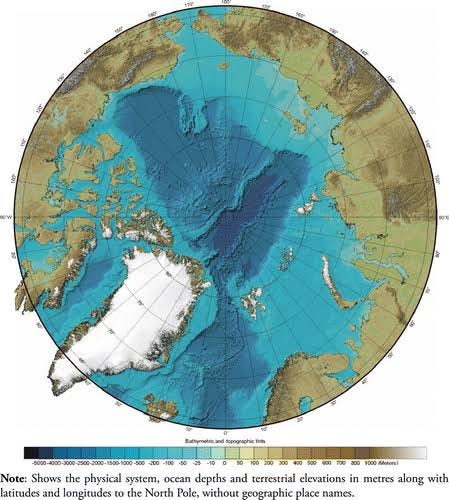
Greenland is a geography. It juts out into the Arctic Ocean like a great, unsinkable aircraft carrier and missile base, closing the coverage gap with European NATO partners Norway and Sweden. Subs, planes, and missiles staged out of Greenland can cover the north pole and the undefended islands of northern Canada. More to the point, Denmark cannot use Greenland to do this, nor can NATO.
Altogether, France and the UK — the only other NATO powers that have nuclear submarines — have 8 or 9 in service at any given time. The US Navy has more than 60 nuclear-powered submarines. There is no question which NATO country was always expected to handle this job.
France operates the only nuclear-powered aircraft carrier in the world that is not American. Charles de Gaulle carries between 20 and 30 fixed-wing aircraft, mainly Rafale M fighters, with some helicopters and E-2 Hawkeye airborne early warning aircraft. This is less than half the air power on the USS Abraham Lincoln.
The two Royal Navy aircraft carriers, neither of them nuclear-driven, also each carry about half the Lincoln’s actual combat power. This is the sum total of European capabilities to defend the Arctic on behalf of Denmark without the United States, which has 11 nuclear carriers in commission.
America was always going to be the default defender of the Arctic. The question was under what mechanism. Trump was impatient with the previous terms of the 1951 agreement, especially given the new mood in Denmark for Greenland independence. He wanted to lock in a strategic monopoly now, before any such transition. Locking Russian and Chinese military ambitions out of Greenland was essential to that end.
After his casino ambitions failed in the 1990s, Trump reduced his ownership stakes in properties to focus more on licensed branding. This ingrained habit, born of his most embarrassing failures, made speculations of an outright Greenland purchase less likely to actually bear fruit from the beginning of his second term.
Commercial access follows on military access. Speculation about an agreement to exploit mineral resources in Greenland — oil, gas, rare earths — has accompanied the controversy for two years. Such a deal is more likely now that the United States has received a monopoly over the security of Greenland.
Part of the deal includes comprehensive basing rights, and that aspect has led to some of the dumbest ahistorical takes on the matter from newly-minted experts.
Under Article II of the 1951 Defense of Greenland Agreement, amended in Igalaku in 2004, Pituffik — the airbase formerly known as Thule — is the only existing defense area that does not require an Article II process to improve the infrastructure.
In order to return to any Cold War-era base, reopen it, and build modern things there, the US had to first formally consult both the Kingdom of Denmark and the government of Greenland. Even upgrades to Pituffik could create local consultative disputes to be resolved through diplomatic channels and a Permanent Committee.
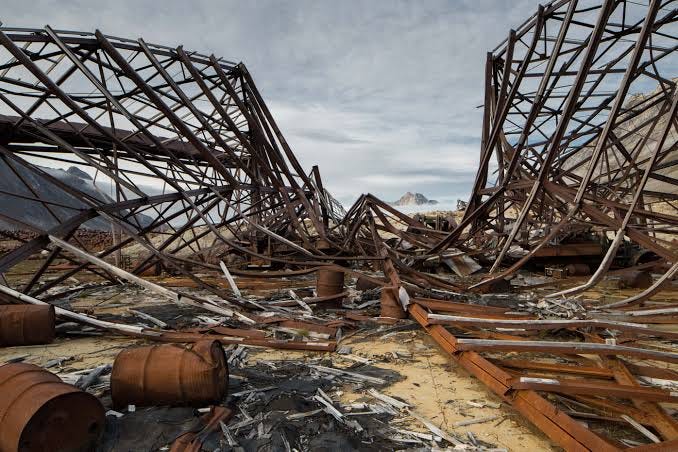
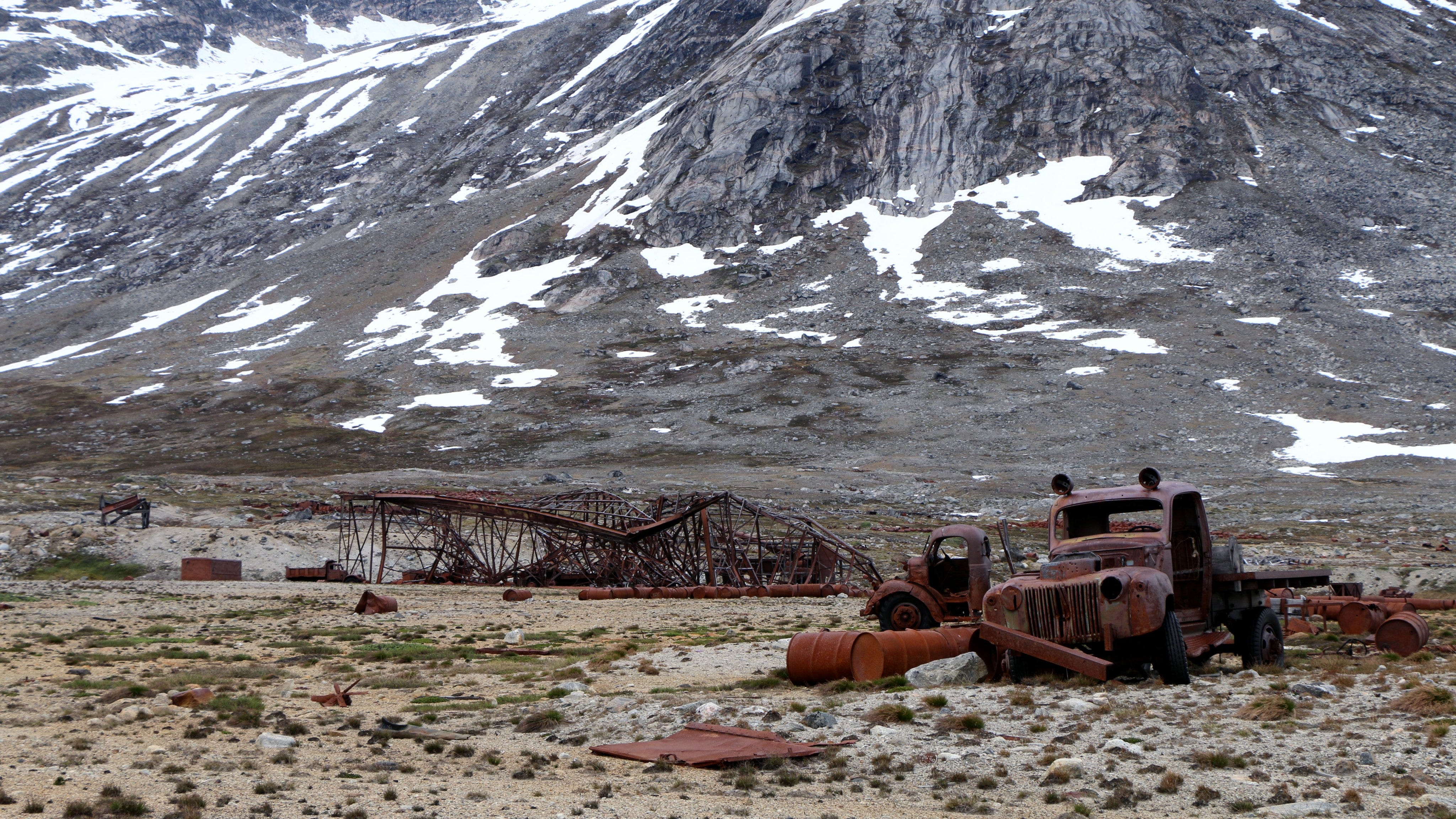
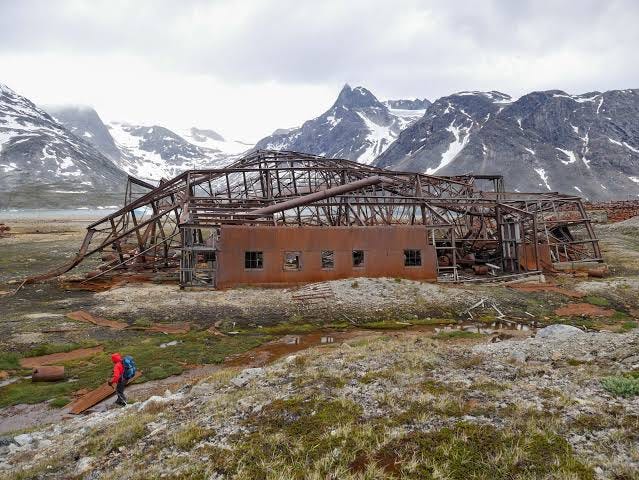
Just looking at these abandoned relic sites should give an impression of what makes breaking ground right away critical in the view of the Pentagon. Quonset huts will simply not do for the 21st century air base, missile base, or submarine base. By letting these facilities rot instead of keeping them open, the Department of Defense likely saved untold billions of taxpayer dollars.
There are very practical reasons why these were some of the very first bases to go at the end of the Cold War.
Just operating in, on, and over Greenland is dangerous and expensive. Peak troop presence peaked around 10,000 and now stands at a few hundred. Simply breaking ground on permafrost will require more modern engineering solutions than what existed in the 1960s, at the height of Greenland’s prominence in the Cold War.
Random residents may have to be moved. The forced relocation of 116 Inughuit to expand Thule in 1953 was contested for decades and culminated in the renaming of the base in 2023 under the Biden administration. This sort of tortured land acknowledgement is exactly what Trump wants to avoid in any Greenland base expansion of any size.
Danish Prime Minister H. C. Hansen secretly gave permission to the United States to store nuclear bombs and air-defense missiles at Thule in 1957. In public, he had a nuclear-free policy at the same time. The truth was disclosed in ‘Thulegate’, a series of Danish investigations into nuclear incidents on the island.
During 1968, a B-52 flying in Operation Chrome Dome, an airborne nuclear alert mission, crashed on the ice near Thule carrying four B28 nuclear bombs. The conventional explosives in the weapons detonated without producing a nuclear yield, scattering radioactive material like dirty bombs. Chrome Done was immediately suspended while Project Crested Ice, the cleanup mission, began.
One legacy of Crested Ice was a series of worker claims, by both Americans and Danes, around later illness and compensation. The disclosure of nuclear overflights embarrassed the Danish government more than the Americans. Project Century and Project Iceworm also left radioactive wastewater, diesel, PCBs, and sewage in the ice as environmental hazards.
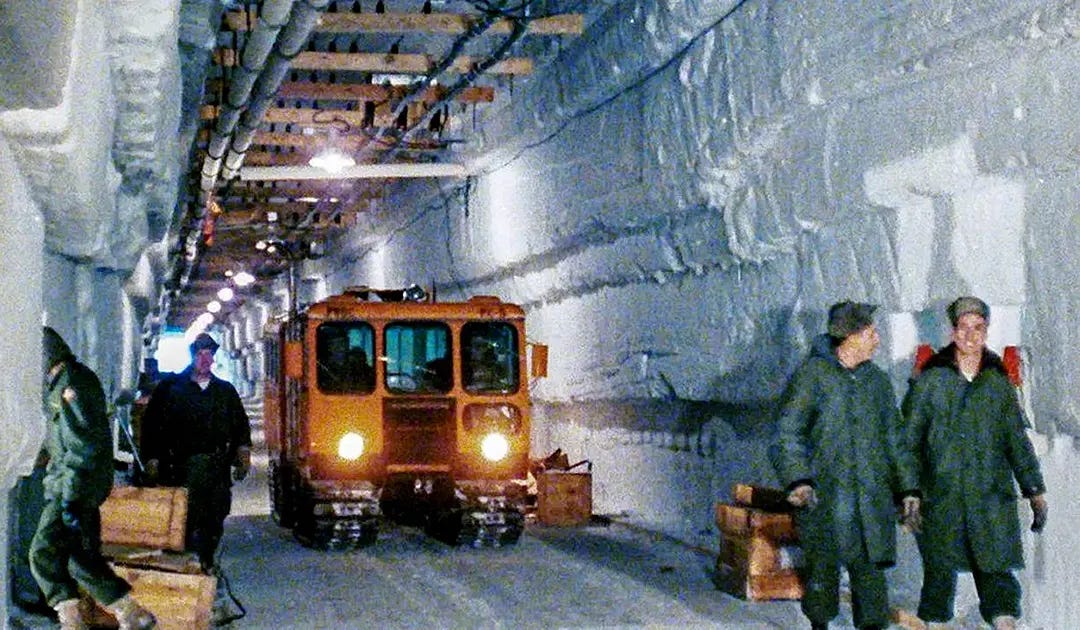
The U.S. Army built Camp Century under the ice sheet and presented it to the world as a scientific station with a portable nuclear reactor. But as construction began in 1959, its real, classified purpose was to test whether hundreds of nuclear missiles could be hidden in tunnels under the ice.
Denmark was not fully informed of the plan for a nuclear magazine or the scope of American ambitions. Inexperience with glacial geology led to failure when the ice sheet proved to be unstable. The reactor was removed and the camp was abandoned. Camp Century is the most cited example of at least 17 toxic sites left behind in Greenland from the Cold War.
Trump does not want any responsibility for past problems. So far, the deal does not seem to include cleanup, or a re-litigation of Thulegate. He is free to start building right away, and not soon enough, for Europe is abuzz with expectation of imminent Russian ‘gray zone’ aggression. Greenland is no longer in any sort of gray zone.
For better or worse, President Trump has met the conditions outlined for success in Greenland at the beginning of his second term. He got what he wanted most. Ownership is not always feasible or desirable in any finalized Trump deal. He just wants to put his name on something.
In his ghostwritten book The Art of the Deal, Trump ‘writes’ openly of his penchant for opening a negotiation with maximal demands, remaining persistent, and getting to the real objects of his desire in the end. This haggling process always starts high, takes time, and involves leverage.
I do not say this out of love for the current commander in chief. My analysis is cold-blooded. He has gotten what he wanted out of Greenland. Some people just need to cope harder with that.
No One Has Dredged A New Channel Through Hormuz. ‘Milk Run’ Tankers Made Iran Mad

Last Friday, a YouTube content creator named Matt Morse started a fake news cascade when he reported that a new passage had been dredged in the Strait of Hormuz. In fact, the passage between the Fakk al Asad peninsula and the island of Bab Musandam has been charted for many centuries, and powered vessels use it all the time, including the present hostilities.