
US Navy Cooperated With Nobel Prizewinner's Escape From Venezuela By Boat
Operation hints at extent of US intelligence penetration in Venezuela
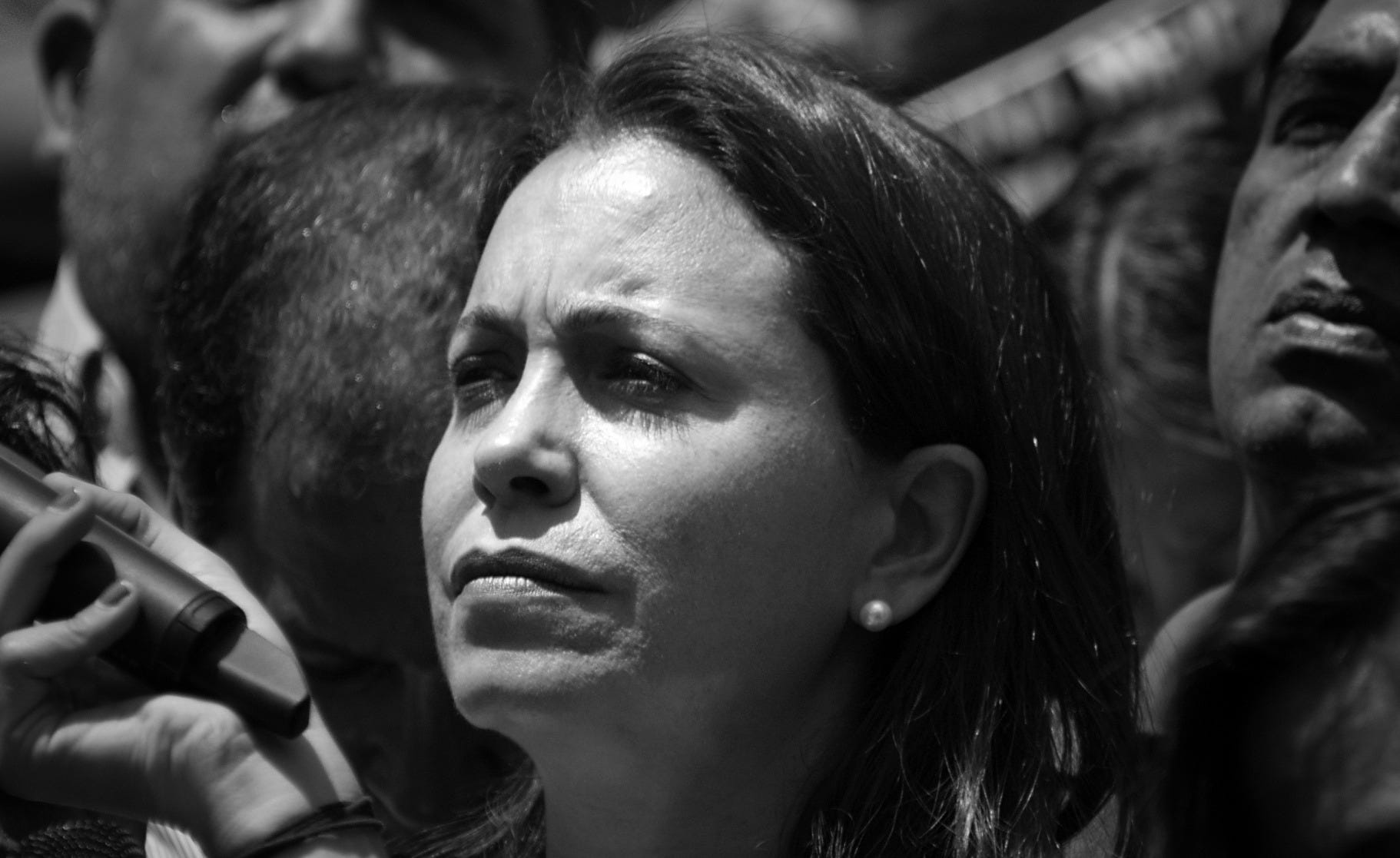
María Corina Machado, a Venezuelan opposition figure, escaped her country this week to receive her Nobel peace prize in person. According to reporting from The Wall Street Journal, the group which exfiltrated Machado “made an important call to the U.S. military before they set out to sea, warning American forces in the region of the vessel’s occupants to avoid the kind of airstrike that has hit more than 20 similar vessels in the past three months”.
“We coordinated that she was going to leave by a specific area so that they would not blow up the boat,” said the person close to the operation.
The Trump administration was aware of the operation, said people familiar with the matter, but the extent of its involvement was unclear.
The resistance group not only deconflicted their operation with the Americans, they received the best escort services the Pentagon could offer to ensure that Machado made it to her award ceremony. On one level, this story is about Donald Trump buttering up the Nobel prize committee while his administration works for regime change in Venezuela:
Around the same time of their crossing, a pair of U.S. Navy F-18s flew into the Gulf of Venezuela and spent roughly 40 minutes flying in tight circles near the route that would lead from the coast to Curaçao, according to flight-tracking data. It was the closest incursion of U.S. aircraft into Venezuelan airspace since the U.S. military buildup began in September.
Machado arrived in Curaçao around 3 p.m. Tuesday. She was met by a private contractor who specialized in extractions and was supplied by the Trump administration, the person said.
On another level, though, this story shows how closely the War Department is coordinating its activities in Venezuela with resistance groups, hinting at the depth of the intelligence picture available to decision-makers in the Pentagon. Adm. Mitch Bradley, the man who ordered the first strike on a narco ‘go-fast’ boat in September, followed by “several” subsequent strikes that sank the wreckage and reportedly killed survivors clinging to it, may have relied on intelligence that no one else has.
For example, the sources who first surfaced the story in garbled form in The Washington Post may not have received information from Venezuelan resistance about the contents of the boat. Most go-fast boats do not carry fentanyl, which is 2.5 times as deadly as cocaine, but Tren de Aragua is a narcoterrorist organization, and the man who runs it, President Maduro, is considered a fugitive from justice by the United States — and he is a demonstrative ally of America’s enemies.
So it is entirely possible that the wreckage Adm. Bradley destroyed contained fentanyl as well as cocaine, in which case Democrats will be hard-pressed to explain why Americans should care about the fate of the narcoterrorists who clung to their deadly fentanyl in the water. Our understanding of this story will change as our knowledge of what Bradley knew changes. It is highly unlikely we will learn anything to inspire sympathy for the dead.
We have already seen the context of the 2 September operation change in the reporting. At first, it was personally overseen by Pete Hegseth, who callously ordered that survivors be killed. No one who understood the Pentagon quite believed this initial version of the story, though, because admirals literally exist for the sole purpose of planning and overseeing naval operations, and Hegseth is many things, but not a micromanager.
Predictably, it turned out to be Adm. Bradley who chose the smaller AIM-114 Hellfire ammunition, for reasons that he has yet to explain (and which may be perfectly legitimate), and ordered the subsequent strikes on the wreckage to comply with his orders in the manner he saw fit. As I explained last week, Operation Southern Smear, the attempted political takedown of Hegseth on the basis of this story, was never going to work because the initial reporting did not reflect how the military actually works.
Lawfare is the use of legal systems to damage an enemy. The American Civil Liberties Union is suing to obtain the Pentagon memorandum that lays out the legal rationale for strikes on go-fast narco boats. American Oversight is suing to obtain records related to the strikes. Democrats are trying to make Hegseth release the unedited video of the strikes, that is, the version that has potential information that is useful to narcoterrorists, and that might inflame the public. They are all trying to damage their domestic political enemy, and politics begin at the water’s edge.
None of this evinced ‘human rights’ concern for some of the worst people on the planet is ever extended to the 100,000 Americans dying on the streets of drug overdoses every year. Those victims are just fair game for people who hate America, according to Americans who think of America as the enemy. The point of all this pro-narcotrafficker lawfare is not to make American drug policy better, but to render it entirely ineffective so that Hegseth is ineffective, and Trump ineffective. Effective drug policy necessarily uses some measure of violence, however, because violence is an inherent vice of drug trafficking.
Of course, the political left is also defending Venezuela and the reputation of socialist economics, here. In that sense, Hegseth is the proxy for Donald Trump and the confrontation with Maduro’s regime. The collapse of the Maduro regime would quickly unmask the many embarrassing failures of statist redistribution in Venezuela right as the American youth cohort is supposed to be embracing socialism. Just as there is a long-running ideological war within the Pentagon over drone strikes that has bled over into the controversy over OP Southern Spear, there has been a decades-long ideological contest over Venezuela, in America, that is culminating in this controversy.
What did Pete Hegseth know, and when did he know it? More than you or me, dear reader, and a lot more than his critics know. But it will all ultimately play out as politics, not as indictments. The people yammering about ‘war crimes’ will never get the outcomes they say they want, nor would trials go the way they pretend, for the evidence will never lead to the place they want. Lawfare is never a decisive weapon against a mortal enemy, not in a free society. If it was, Trump would not have made it to his second run for president. Lawfare can only work that well in a place like Venezuela, where ‘democracy’ and ‘rule of law’ are utterly meaningless.
Why The Attempted Takedown Of Pete Hegseth Was Doomed From The Start
The same people who propelled Russiagate on Twitter are insisting today on X that Secretary of War Pete Hegseth has thrown Adm. Mitch Bradley (see photo) under the proverbial bus by calling him “an American hero, a true professional” who “has my 100% support” for “the combat decisions he has made — on the September 2 mission and all others since.” Prais…


