
The Siege Of Boston: Washington's First Victory
Second essay in a free series on the American Revolution
America’s first president had a gift for surprises. “With me it has always been a maxim rather to let my designs appear from my works than by my expressions”, George Washington wrote in 1797.1 At sunrise on 5 March 1776, the British occupiers of Boston woke up to discover that overnight, without raising any alarms, Washington had turned the Dorchester Heights into a fortress that massed his artillery against the city and the harbor.
Washington was not even supposed to have so many guns. The cannons had traveled a very great distance overland to reach Boston. “My God, these fellows have done more work in one night than I could make my army do in three months”, Gen. William Howe reportedly exclaimed.2 In fact, months of work had culminated in this ending to the Siege of Boston.
Howe made a valiant attempt to organize a complex plan of attack on the heights. It would have been another Bunker Hill, but to the relief of his officers who advised against it, a storm prevented Howe from executing the plan. Instead, during the evening of 9 March Howe ordered his own cannonade against the Dorchester Heights, expending more than 700 cannonballs in a vain attempt to cover the noise of his army abandoning the city for Halifax. They had bled enough for Boston. He was leaving.
Howe need not have bothered with the cannonade. Washington did not press the issue and let his enemy withdraw without a fight. Howe’s army was unable to leave Boston in a single night, anyway. Altogether, 120 vessels stretched nine miles out to sea when the British finally finished their evacuation on 17 March. “A fine, quiet night”, Abigail Adams wrote. “No alarms—no cannon.”3 Her own warlike spirit gathered in the silence.
The more I think of our enemies quitting Boston, the more amazed I am that they should leave such a harbor, such fortifications, such intrenchments, and that we should be in peaceable possession of a town which we expected would cost us a river of blood, without one drop shed. Surely it is the Lord’s doings, and it is marvelous in our eyes. Every foot of ground which they obtain now they must fight for, and may they purchase it at a Bunker Hill price.
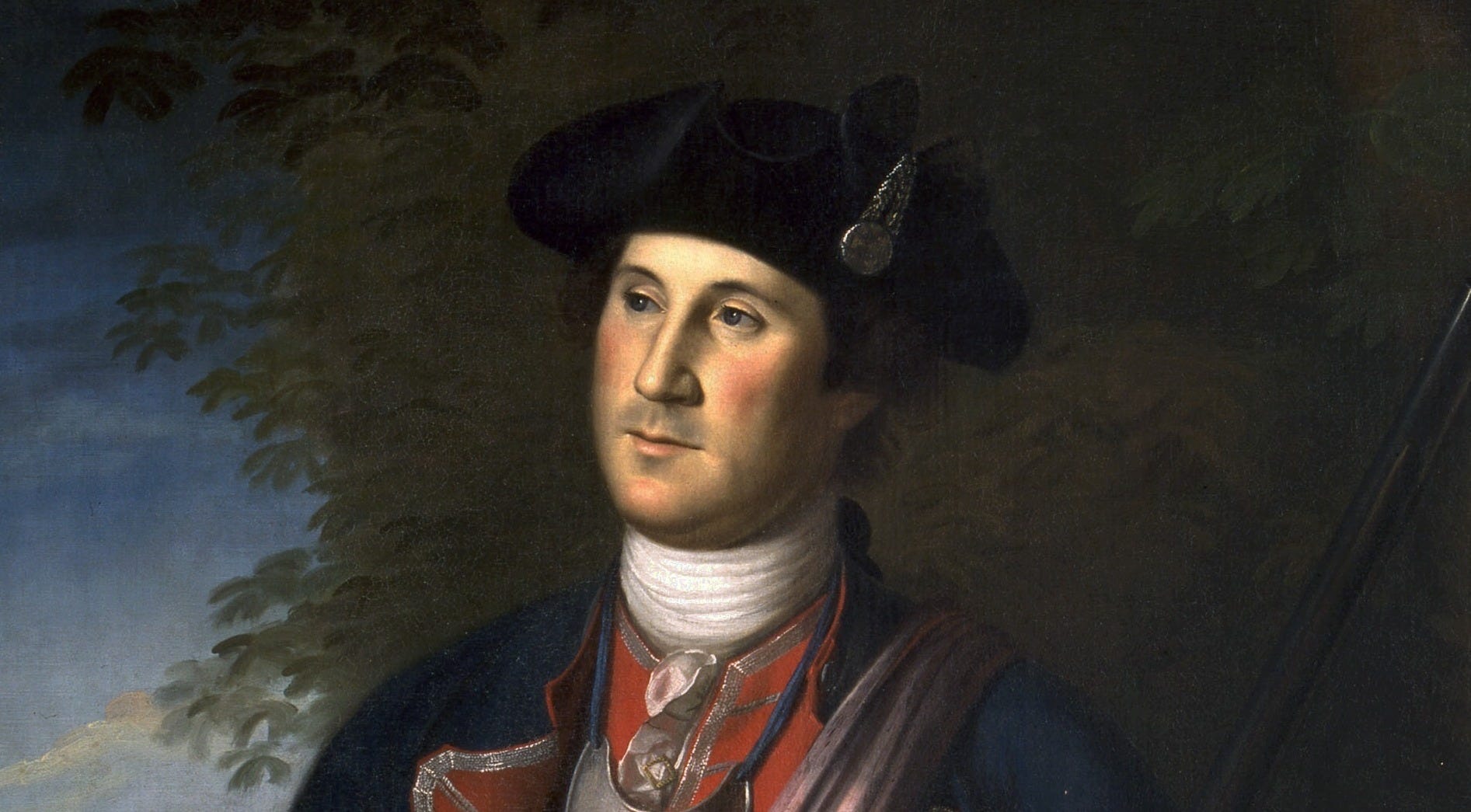
The Continental Congress struck its first medal to celebrate the victory. Aware of history, they also commissioned Charles Willson Peale to paint a new portrait of Washington. In his updated image, the Father of the Country “displays none of the swagger of a triumphant general”, Ron Chernow writes in his biography of Washington.4 “The look in his eyes is sad, anxious, even slightly unfocused, as if his thoughts had already turned to his upcoming troubles in New York.”
“His shoulders appear narrow, and his body widens down to a small but visible paunch. It was way too soon for a full-fledged cry of triumph, Peale seemed to suggest, and events would prove him absolutely right.” Like most patriots of the new nation, Washington had hoped for a quick resolution in 1775, but the invasion of New York the next May changed his mind.
In a September 1776 letter to John Hancock, the president of the Continental Congress whose enormous signature adorns the Declaration of Independence, Washington warned that “this contest is not likely to be the Work of a day”.5 He saw “no other possible means to obtain [recruits] but by establishing your army upon a permanent footing”. He warned that “nothing but a good bounty can obtain [new soldiers] upon a permanent establishment; and for no shorter time than the continuance of the War, ought they to be engaged.”
The glow of victory after Boston did not last long, only weeks. Still, Washington’s first victory over the British Army was his most important, for he had to prove it was possible. Moreover, the victory was earned through Herculean efforts, a monumental work of planning and logistics. The talents of his staff would come to define the ultimate victory of the fledgling United States in Washington’s hands. As a practical matter, the Dorchester Heights were a genuine milestone in the American Revolution.

The seizure of Fort Ticonderoga on the southern end of Lake Champlain had been the first significant action by colonials after the ‘battles’ of Lexington and Concord in April 1775. Organized by Ethan Allen and Benedict Arnold, a force of volunteers overran the British garrison in a nearly bloodless storming operation on 10 May, capturing dozens of cannons of various calibers with just one bayonet wound inflicted.
Delegates in Philadelphia were not altogether pleased to learn that the most important British base in northern New York had fallen into their hands. The seizure advanced their cause, but also invited retribution, so Congress vowed to return the fort upon “the restoration of the former harmony” they “so ardently wished for”, in the words of Gouverneur Morris.6 A peaceful handover would never come to pass.
Washington needed the guns from Fort Ticonderoga. Without cannons, he could never hope to force the British out of Boston. Henry Knox offered to fetch the “noble train of artillery”, as he referred to it, and Washington accepted his offer in November 1775. This task was far easier said than done. Upper New York being frontier, still, the roads were nonexistent or terrible. Knox had to bring 60 tons of mortars and cannons over mountain ranges and through forests using oxen, horses, and humans.
Arriving at Fort Ticonderoga, Knox immediately began moving the guns on 6 December using a flat-bottomed scow. Knox sailed ahead of the scow in a two-sailed pirogue built for the lake. His brother William was in charge of the scow when it foundered in shallow water at Sabbath Day Point and had to be bailed out. Writing to Washington on 17 December, Knox predicted he would arrive overland with the guns in “16 or 17 days”.7 It took him almost 40 days and nights. Knox had planned for $1,000 in costs and ended up billing the Continental Congress for $2,500, which they took their time paying back to him.
Some communities responded to Knox when he entreated their committees of safety to assist along the way with fresh animals and food. Not all of them did. Yet the train made it across the frozen Hudson River, even recovered a cannon that had fallen through the ice when it was cut loose to save the horses, and then the convoy survived a snowbound week in the mountains near Albany between Christmas and New Year’s Day. A second cannon went through the ice re-crossing the Hudson at Albany, requiring another dangerous recovery.
The terrain froze and then thawed, bogging the sleds down in mud. Knox observed that it was “almost a miracle that people with such heavy loads should be able to get up and down such hills as are here”. But the biggest obstacle proved to be the townsfolk of Westfield, Massachusetts, who turned out to see the great artillery train with whiskey and cider to share. The men of the train were soon in no fit state to continue. Surrendering to the moment, Knox had one of the largest cannons loaded and fired to entertain the people.
The Knox was obliged to send the New York teamsters home, for they did not want to work in Massachusetts. After hiring new animals and men, he pushed on to Washington’s headquarters at Cambridge, arriving on 25 or 27 January (sources differ). At long last, Washington could begin to plan the liberation of Boston.
Washington did not outnumber Howe, nor could he afford to move the guns into position, over time, in full view of the enemy, who might spoil his preparations. “The ingenious solution was to haul the guns into position under cover of darkness during a single night”, Chernow writes. “Noise from the operation would be muffled by firing steady salvos from Roxbury, Cobble Hill, and Lechmere Point and by wrapping wagon wheels with straw to deaden their sound.” Movements were screened by walls made of hay bales. Prefabricated fortifications were carried onto the heights and installed in the darkness.
Washington entrusted these preparations to Gen. Artemas Ward, along with two more generals and his Quartermaster-General, when they informed him that they had been considering the matter for some time, and in fact they had already laid up materials. “First came the covering party of eight hundred men; then carts with intrenching tools; then the working-body of twelve hundred men, under Gen. Thomas; then a train of more than three hundred carts loaded with fascines, hay, &c., in martial procession”.8 Carts made as many as four trips in support of the movement. Two forts were raised on hilltops by 10 PM on 4 March, the works being ready by 3 AM, so that dawn revealed a completed fait accompli.
Washington’s men had come up with an ingenious weapon to make the heights even more formidable. The Dorchester works were fronted by “rows of barrels filled with earth, placed round the works”. Chained together and weighted with stones, the barrels could be pushed down the steep hillside if the British tried to advance up the slope, as they had at Bunker Hill, inflicting casualties and breaking up the line of infantry. Howe looked upon this improvisation with dismay, then resignation.
The British withdrawal was anything but gentle. Between the 9th and the 16th, Howe’s evacuating troops indulged in “pillage, robbery, and destruction, almost without restraint, from officers, soldiers, marines, and sailors; and the utmost confusion and hurry prevailed throughout the town.” Howe issued orders against theft and looting, but to no avail. When the soldiers embarked, the sailors took their turn.
Nor was Howe able to effect a scorched-earth strategy. “The official robbery was performed by a notorious and pretentious New York Tory, Crean Brush, at the head of a gang of soldiers of Tories, who acted under Gen. Howe’s orders in seizing large quantities of goods” that the rebels might use for their war. “Crean Brush obeyed his orders thoroughly and maliciously, entering and robbing the stores or houses indiscriminately, under the broadest possible interpretation of his orders.”
Still, somehow Brush managed to leave behind thirty thousand pounds’ worth of “warlike supplies and stores”, in Washington’s estimation. Adding injury to insult, Crean Brush was later captured on board the brig Elizabeth with all the goods he had seized. None of it ever served the British Army.
Beginning on the morning 14th of March, Gen. Howe sent a crier through the town to warn the residents of a curfew until nightfall, “lest they should annoy the troops in their intended embarkations.” The next day, he summoned the city fathers and threatened to burn the town if they interfered. Winds proved unfavorable on the 15th. Finally, the British Army left, some buildings still smoldering from deliberate fires they had set to deny their use to the rebels.
Conscious of the danger that Boston would be in, Washington ensured the first five hundred men to enter the city were already immune to smallpox. “In a beautiful symbolic act, he returned a horse given to him after learning that it had been swiped from a departed Tory who had been ‘an avow[e]d enemy to the American cause’”, Chernow writes. “Once again, by opposing vindictive actions, Washington shaped the tone and character of the American army.” Whatever terrors the British had inflicted, or were still to inflict, Washington would continue to resist replying in kind.
“Both John and Samuel Adams regarded Washington’s appointment as the political linchpin needed to bind the colonies together”, Chernow says. Washington’s presidency served the same end, later. However fleeting his first victory at Boston was, the rest of the story of the Father of the Country would not have been possible without it. The character of that victory, won through sweat rather than blood, speaks to the character of the men who won it, and explains why America is an exceptional nation. Patient, principled leadership won the war and defined the republic.
I am making these premium essays on the American Revolution FREE in 2026. If you are a free subscriber, please consider upgrading to support this work.
George Washington to James Anderson, Thursday, December 21, 1797.
McCullough, David. 1776. Simon and Schuster, 2005.
Adams, Abigail. Familiar Letters of John Adams and His Wife Abigail Adams During the Revolution with a Memoir of Mrs. Adams. Houghton Mifflin Co., 1875.
Chernow, Ron. Washington: A Life. Penguin Books, 2010.
George Washington to John Hancock, 25 September 1776.
Adams, William Howard. Gouverneur Morris: An Independent Life. Yale University Press, 2003.
Ware, Susan. Forgotten Heroes: Inspiring American Portraits from our Leading Historians. Simon & Schuster, 1998.
Wheildon, William W. Siege and Evacuation of Boston and Charlestown with a Brief Account of pre-Revolutionary Buildings. Lee and Shepard, Boston, 1876.


