

The Islamic Revolutionary Guard Corps Must Decide How It Wants To Die, Now
IRGC units are following a plan that no longer works
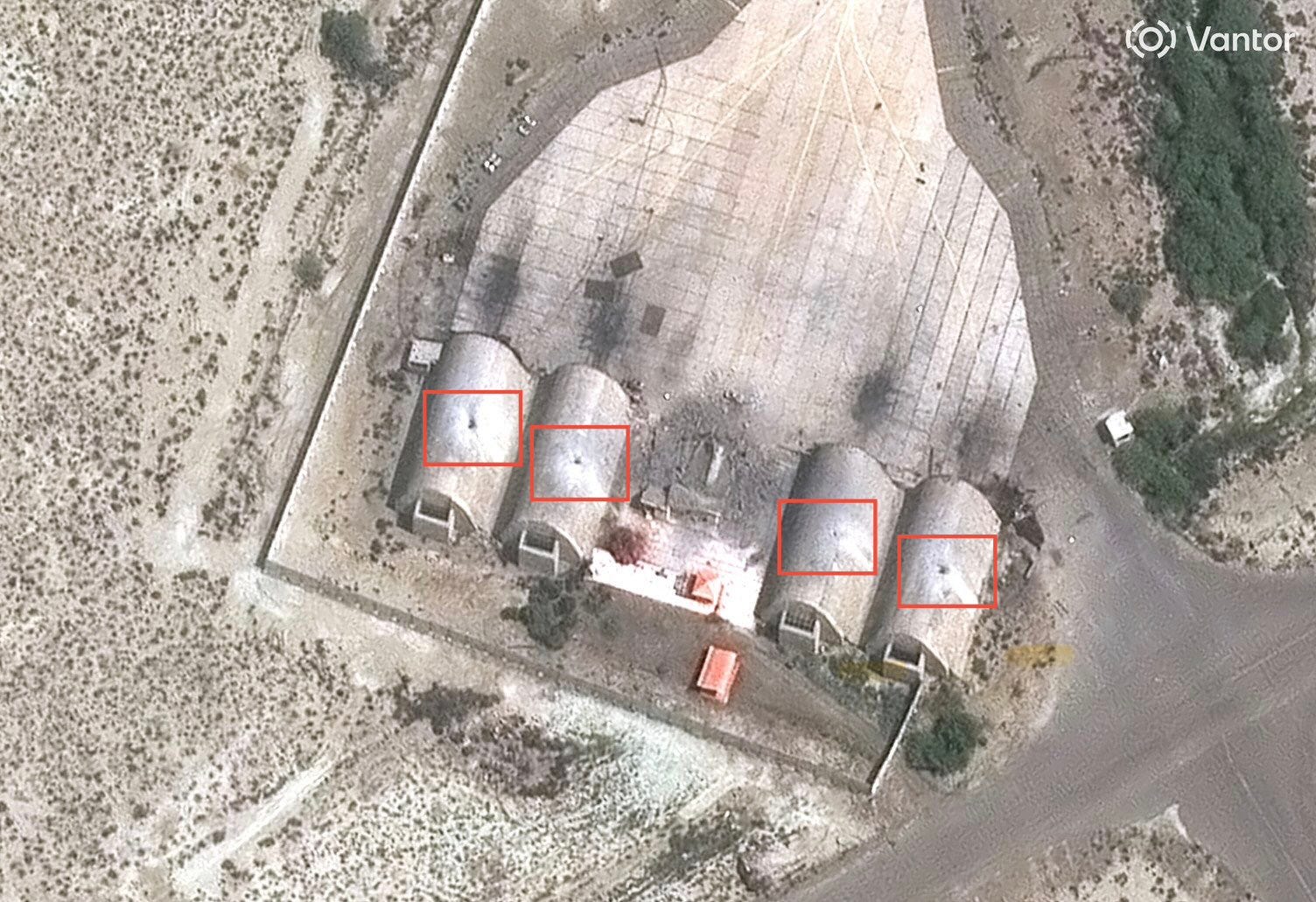
Yesterday, Iranian Foreign Minister Abbas Araghchi signaled that the Islamic Revolutionary Guard Corps is acting on its own, now. “What happened in Oman was not our choice”, he told Al Jazeera, referring to overnight missile strikes on that country. “We have already told our Armed Forces to be careful about the targets they choose.” We are supposed to infer from this that the IRGC is not listening to their civilian leaders, which is really not a surprise at all, since the only civil authority the IRGC ever recognized was the supreme leader.
Acknowledging the obvious, Araghchi made it clear that no centralized command and control exists in Iran at present. “Our military units are now, in fact, independent and somewhat isolated, and they are acting based on general instructions given to them in advance.” War plans in Iran have always aimed at decentralized infrastructure, for example scattering missile storage bunkers and command centers around the country. According to Araghchi, the IRGC is still following their pre-war plan. The one that has failed, so far, at stopping the Americans or the Israelis.
That plan, which was presumably approved by some sort of rational thought-process, is to strike Gulf neighbors who had carefully maintained their neutrality in hopes of forcing them to make the United States stop. It means hitting any ship they see attempting to transit the Strait of Hormuz, even if it is their own shadow fleet tanker. This is a bad plan for military victory, but a good plan for spazzing out like a speared lizard in a reflexive act of institutional death.
IRGC has nowhere to run or hide. Communications are necessarily as slow as the word of mouth of a single messenger because no electronic device is safe. Command paralysis was evident on Day One. On Day Two, the IRGC was still struggling to adapt. They said they launched missiles at the USS Abraham Lincoln, but in fact they simply launched missiles at the body of water where the ship was sailing and called it a day. This morning, video of yet another failed Iranian rocket launch appeared on social media. It was not enough yesterday that the IRGC admitted it was their missile that struck a school on Day One; the inevitable denials and gnostic invocations of magical Zionist powers continue. So if you won’t take their word for it, watch for yourself just how reliable Iran’s rockets really are.
Meanwhile, the American strikes have destroyed nine ships, “some of them relatively large and important” according to President Trump, who says “we largely destroyed their Naval Headquarters” as well. The Pentagon has announced that three US servicemembers were killed and five wounded yesterday, releasing no details. For those of you keeping score at home, exactly three US servicemembers were also killed by Iran in Jordan in 2024, whereupon the Biden team did exactly nothing in response. Kuwaiti air defense shot down three F-15 fighters last night, apparently a friendly fire incident that might have been avoidable with more pre-war planning and cooperation from that government. All six pilots ejected safely, which means they were injured. This is a lesson in the wages of weakness, moral cowardice, and unpreparedness.
In addition to the supreme leader, the first-day strikes eliminated the Minister of Defense, the equivalent of the Chairman of the Joint Chiefs of Staff, the Head of Security and Intelligence to the Leadership Council, the commanders of the IRGC as well as the IRGC Navy, the Intelligence Directorate, and others at the top of the chains of command. President Masoud Pezeshkian, who was initially reported as among the dead, is still alive, and still powerless. The IRGC and Basij have all the hard power in Iran, right now. This is changing as the air campaign changes. Day Two saw a discernible shift as total air supremacy allowed aircraft to loiter over Iran, targeting any missile or drone launcher that opened fire.
Mahmoud Ahmadinejad was killed by an initial Israeli airstrike, removing the one such figure in Iran who might have formed a new, even more reactionary government very easily. Conveniently, Ahmadinejad was under house arrest for already having plotted to overthrow the current elected government headed by Pezeshkian, who is a ‘moderate’, at least as that word has been understood in Iran for the last 47 years. Here we see a distinct effort by the US-IDF coalition to veto future antagonistic Iranian leadership in advance, while the ones who might make a deal are left standing. Trump is being misunderstood today in the usual manner, taken literally but not seriously, for saying that the initial strike was more successful than planned, removing many of the men (they are all men) who would have taken over for the targets.
The new supreme leader, Alireza Arafi, is closely affiliated with the IRGC and also Hezbollah. He is seen as a conservative hardliner in the mold of his predecessor, who put him in charge of imposing the regime’s ideology across Iranian society and its export abroad. The fact that Arafi travels freely to Europe says a lot about why Europeans are so opposed to American action against Iran. Arafi is also a temporary fill. First, because the Constitution of Iran says that he must select a new permanent supreme leader as a triumvirate with Pezeshkian and Chief Justice Gholamhossein Mohseni-Ejei, the former intelligence minister. Second, because there are already reports that he was killed in an airstrike.
While unconfirmed, this should surprise no one. Whereas a ‘civilian moderate’ might be a partner for peace as president, the position of velayat-i-faqih will never, indeed can never, be filled by an actual peace partner for Israel or the United States. The position has total authority, as implied by the word “supreme”), and only an ayatollah can fill the office, as the term actually translates to supreme jurist, meaning a Shia clergyman dispensing ‘justice’ from the Qur’an. This is what makes the Islamic Republic Islamic. While I have seen and heard many concerns about the future of Iran, this point seems to escape the entire commentariat, so far. Both the supreme jurist and the IRGC are constitutional organs that have to die in order for Iran to live as a mere Republic.
The IRGC has adapted the strategy of Hamas in Gaza by removing political prisoners and regime enemies from the jails to IRGC sites, where they will serve as human shields, to be reported as civilian casualties if America strikes. Meanwhile, the IRGC has activated their foreign influence networks in hopes of spurring massive protests and terrorist acts in the West. The resulting demonstrations contrast sharply with the enthusiastic celebrations of the Iranian diaspora and only serve to isolate Iran’s western allies. In Austin, Texas, a Senegalese immigrant named Ndiaga Diagne wearing “Property of Allah” on his clothing killed three and wounded 14 at a bar. Hezbollah has apparently decided to draw some Israeli fire. Crowds of men, some armed, attempted to storm the US embassies in Karachi and Baghdad, being repulsed with casualties by United States Marines.
This is the most scattershot response possible, but it is evidently the IRGC’s prearranged plan: initiate regional violence, kill as many Iranians as they can, and pray to Allah.
As of today, the IRGC has struck eleven Muslim countries during the holy month of Ramadan, if you count ‘Palestine’ as a country. Iran has now attacked more Muslim countries than Israelis have in the entire history of their state, and during the supposedly holy month when such things are supposedly forbidden. This strategy has been counterproductive: threats to British installations in the region have forced Prime Minister Keir Starmer to grudgingly authorize the United States to use them, at least a little bit, sort of. France and Italy are also demanding to know why their bases have been hit. An IRGC war plan that was supposed to stop the Americans and Israelis has instead pushed everyone towards their enemies.
However, Turkey, which hosts American forces, has not been subject to bombardment. Ankara is denying a report of a strike on their territory. Neither has Pakistan been hit. The reader is free to speculate as to why the two immediate neighbors of Iran with the most powerful land armies are both exempt from this pre-planned vengeance when they were equally opposed to the war as, say, Oman or Kuwait. Furthermore, the reader is free to wonder why the ‘neocons’ who wanted to invade Iran are so upset about Operation Epic Fury right now.
As we have seen with Delcy Rodríguez in Venezuela, President Trump is happy to work with any individual who works with him. Regime change in Iran has been compared to threading a needle, however, because fewer potential partners exist in Iran’s constitutional system. Trump and Netanyahu have very limited means of controlling the outcome. The country could descend into civil war if competing factions emerge: so goes the argument from the pessimists, right now. Anarchy would indeed be the worst possible outcome — but it would only happen if the rest of the constitutional regime also collapsed with the IRGC.
What the coalition can do is attack the system of oppression. Tharallah Headquarters, which “functions as the regime’s operational brain during moments of unrest” and “coordinates intelligence, policing, Basij militia, IRGC units, and psychological operations, ensuring that repression is not improvised but calibrated”, was destroyed yesterday, one of 2,000 targets reportedly struck. Tonight, there are fresh airstrikes on targets in Tehran. This is spectacle, an intentional display of power that communicates the powerlessness of the IRGC.
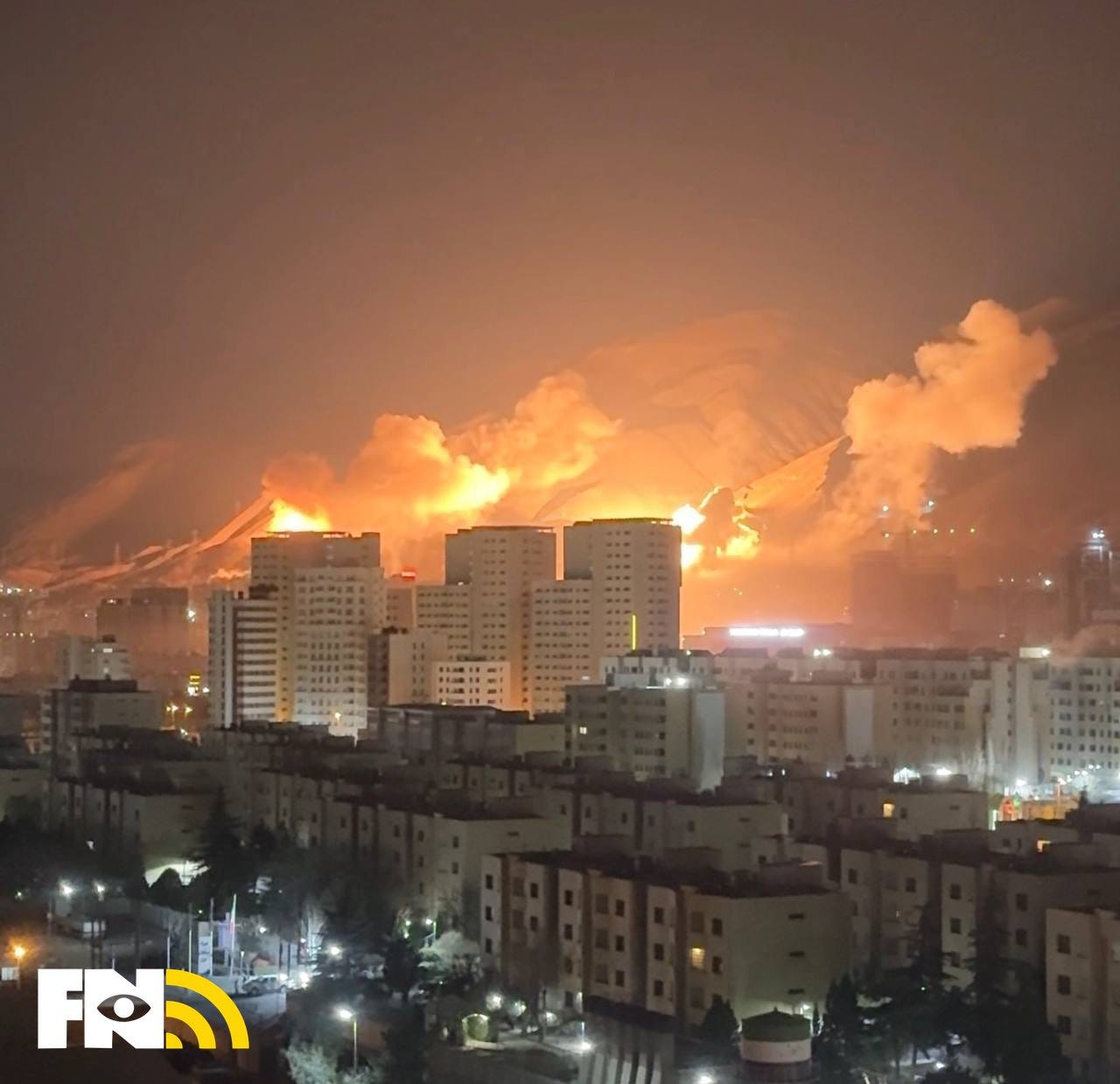
Right now, the new Gulf partners to the coalition are activating their own assets inside Iran, and these will likely be more useful in the dismantling of the regime than their military hardware. The thing that Iran’s neighbors now fear most of all is an IRGC that is wounded but alive, still able to attack their cities and infrastructure. They will want the regime dead, now.
Wars being fundamentally macroeconomic affairs, on Day Three the coalition has shifted to include economic targets. Strikes last night on the Tabriz refinery, and the effective blockade of Iran’s oil traffic, are cutting off revenue that was supposed to pay all the bills for what is left of the regime, including the salaries of IRGC and Basij forces. Religious fundamentalism does not pay bills, and Muslim armies that go unpaid are exactly as restive and fickle as Christian armies that go unpaid. Time is not on the side of the Iranians who would carry on with the Islamic Republic in its present form. Change is already forced upon them. Now it is just a matter of how much blood they wish to shed on the way out.
“To those who would test our resolve or threaten the United States, our allies, or our interests, understand this clearly: we can reach you”, Gen. Dan Caine, Chairman of the Joint Chiefs of Staff, told a press conference this morning. “We can sustain the fight, we can scale the fight, and we will prevail.” Iran was always a hollow military power, unable to sustain a conventional war. Now President Trump is saying the campaign will likely last for a few weeks, which is probably longer than the IRGC can last. This is not over, but it is only going in one direction, anymore.