

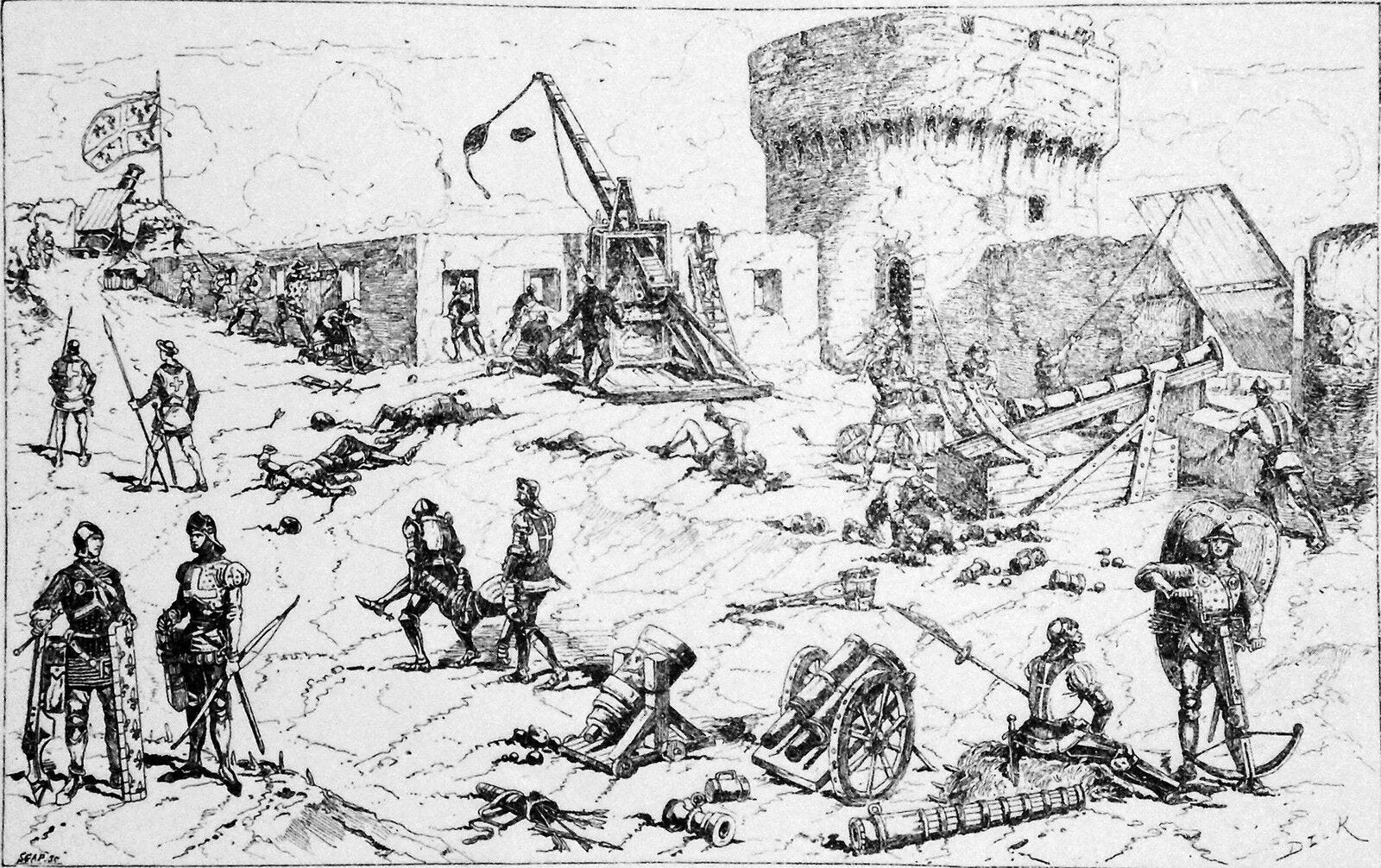
During the 19th century, French nationalism and widespread literacy developed a mass interest in medieval history and national heroes, with Joan of Arc foremost among the latter. Images of French history appeared regularly in popular publications and posters of the time. As one might expect, artists tended to romanticize their reconstructions of medieval sieges in a contemporary mode, though they turned to the historical texts for their material. Arsenals still held examples of obsolete weapons to serve as models. Here and there lay remains of medieval fortifications to inspect.
So while the above illustration, Remparts d’Orléans pendant le siège (Ramparts of Orléans during the siege) is not contemporaneous to the famous Siege of Orléans in 1428–1429, it is an excellent secondary source based entirely on primary sources, even if it is somewhat of an abstraction in its depiction. We do not have a specific point in the defenses of the city, or a particular moment in the siege, as it actually happened. Instead, we have a menagerie of real things that were going on during the seven-month siege.
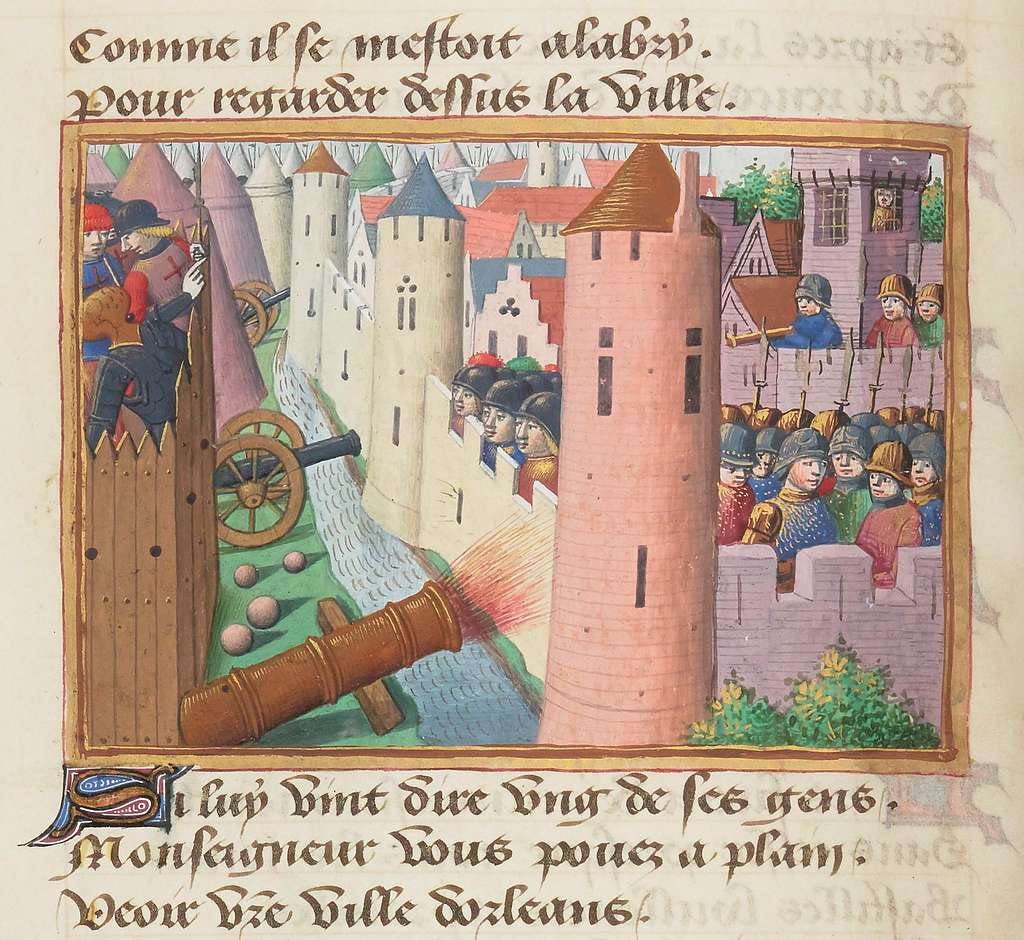
The English commander, Thomas Montagu, 4th Earl of Salisbury, was mortally wounded on 24 October 1428. He was standing at a window to see into the city from the captured stronghold of the Tourelles when a cannonball, reportedly fired from the Tour de Notre-Dame inside the city, struck the window frame, spalling iron and stone into his face. Salisbury died of his injuries a few days later. However, the siege continued, becoming a daily attritional grind.
A more famous episode prompted the end of the siege. Joan of Arc arrived at Orléans on 29 April 1429 with a relief convoy and fresh troops. Her presence dramatically raised French morale. French forces then systematically attacked English positions, with Joan being wounded by an arrow as she led the attack en escalade (up a ladder) against the English bastilles, or field fortifications. Joan fell back but continued to rally her troops. The next day, the English withdrew. The maiden of Arc had saved the city.
Our anonymous 19th century illustration of the Siege of Orléans depicts casualties on the ground or being carried away. Arrows, crossbow bolts, and stone artillery ammunition arrive on random ballistic trajectories to inflict injuries and deaths. Defenders meanwhile keep up a steady rate of fire against the English besieging them this way. Within this dramatic scene, we can see some finer details of the early 15th century artillery park. Perhaps the most striking is the counterweight trebuchet operating alongside early gunpowder cannons.
