

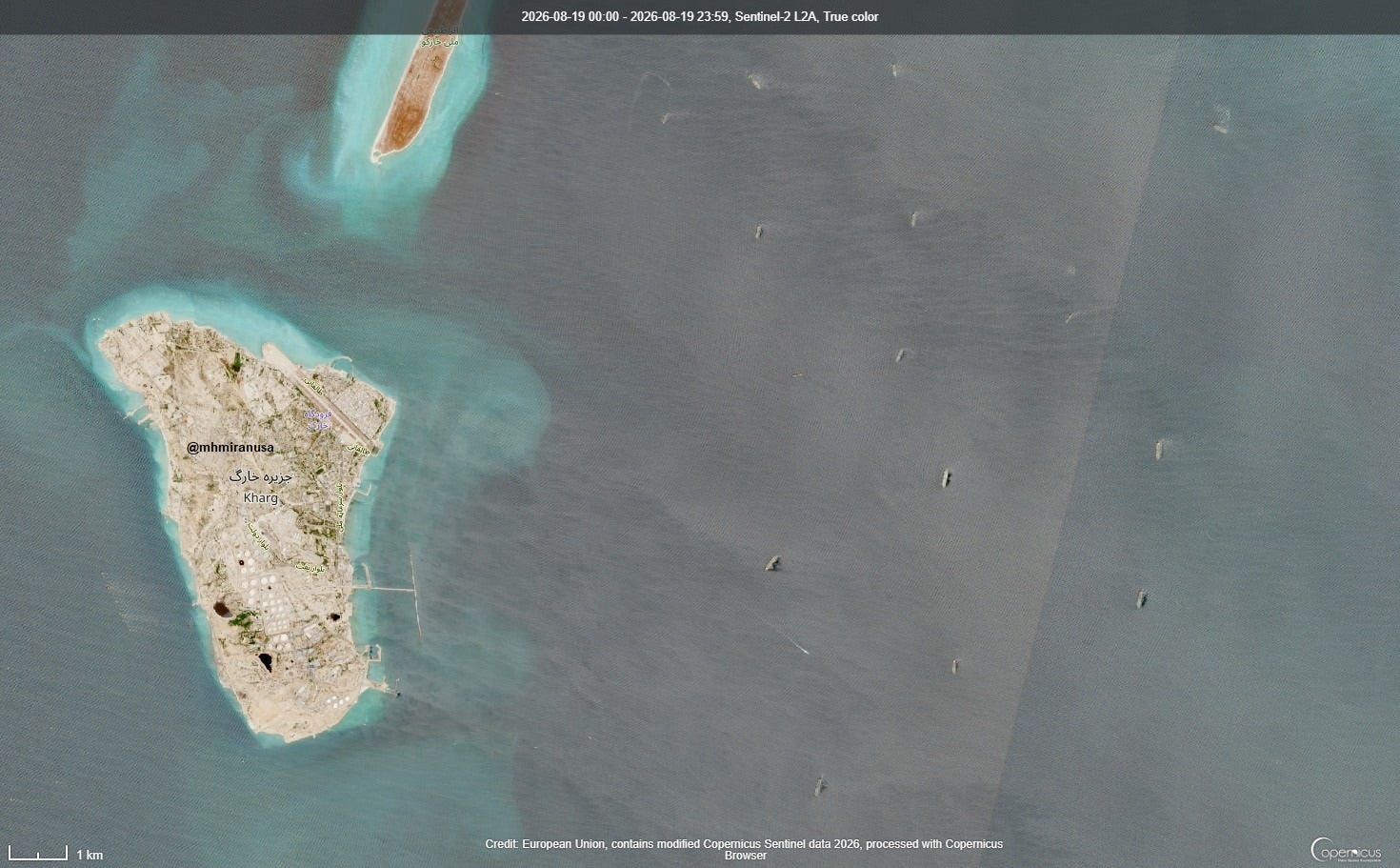
On Tuesday of this week, the Islamic Revolutionary Guard Corps fired two missiles towards the territory of the United Arab Emirates. Both missiles were aimed at marine traffic and fell into the sea without effect, one inside and one outside the boundaries of the Emirates. In retaliation, the UAE suspended all banking and commercial trading with Iran, essentially cutting off one-third of Iran’s foreign economic activity.
Esmaeil Baghaei of the Iranian Foreign Ministry rejected the report as both “baseless” and also a false-flag operation by the enemies of Iran, denying any missiles were launched at all. The civilian politicians of Iran still do not control the IRGC. For example, a strike by an unknown projectile this week on the Liberia-flagged bulk carrier Minoan Dignity killed the chief engineer. The ship was leaving Iranian waters after delivering a cargo of food. It was the second attack on the same commercial management company this month.
“The vessel is beneficially owned by Modion Maritime Management of Greece, with registered ownership under a Marshall Islands entity.” Reader, the Greek shippers and captains are the most courageous in the world. “The recurrence across two vessels from the same manager within two weeks, both following Bandar Imam Khomeini calls, is assessed as warranting examination of a possible commercial dispute dimension, though no confirming evidence is available.” The IRGC picks fights with Iran’s suppliers at sea, first.
Three Chinese vessels aborted Hormuz transits. “The treatment of Chinese-owned tankers is consistent with reporting that China’s two largest state tanker operators, COSCO Shipping Energy Transportation and China Merchants Energy Shipping, are keeping their fleets out of both Hormuz and Bab el-Mandeb on guidance from Beijing.” No one can trust the IRGC to do business, anymore, so Iran is not doing any business.
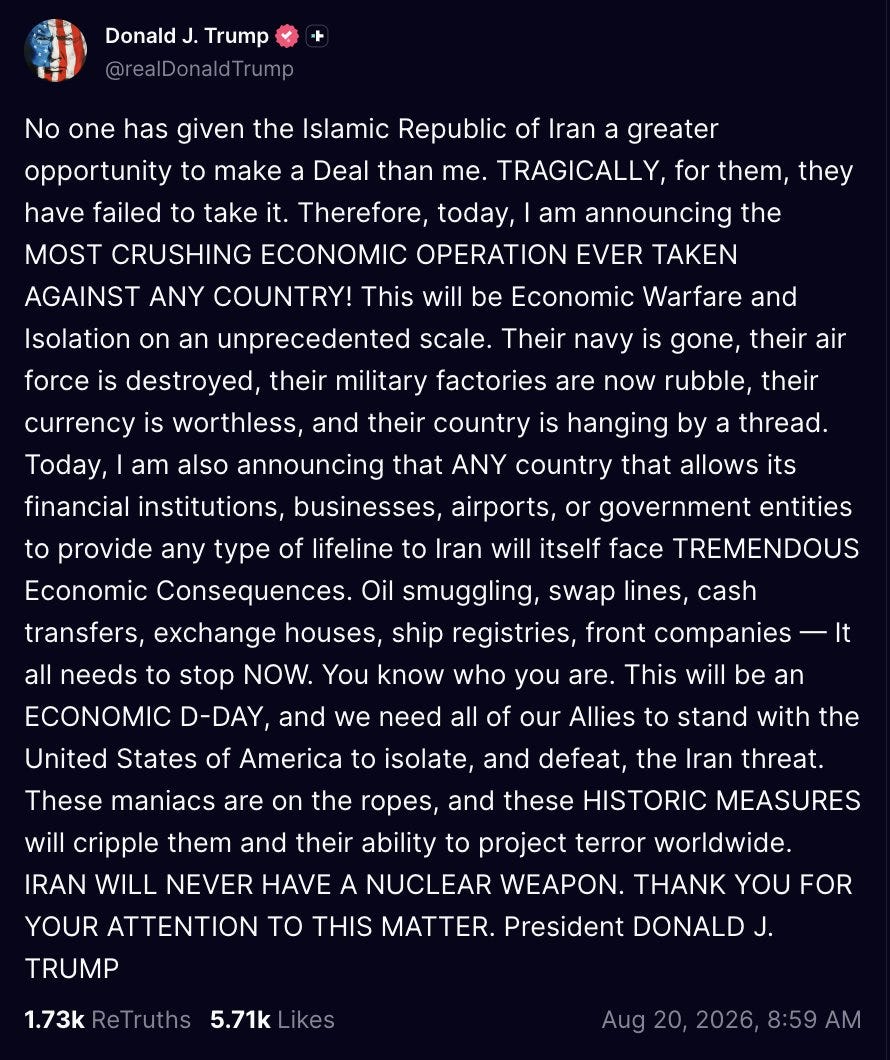
Pride goeth before the fall of a regime
Abdolnaser Hemmati, governor of the Central Bank of the Islamic Republic of Iran, admitted this week that oil exports have “fallen to zero” or are “almost completely halted”.
Iran cannot access frozen foreign currency reserves blocked by the United States. “At present, Iranian oil exports have stopped. We are no longer exporting any oil at all. This is a reality we acknowledge. The other problem is that we are also unable to access our own financial resources.”
Or as the Pentagon reportedly insisted of enriched uranium in June, “No dust, no dollars.”
This is all happening because the 60-day ceasefire window that began 17 June expired without a deal. Power was too divided in Iran. The supreme leader is too hidden and the IRGC is too irresponsible.
Speaker of the Parliament Mohammad Bagher Ghalibaf, who is a former IRGC commander, wants to close a deal that ends the war. “No matter how much military power we have, if people are hungry and we don’t have financial circulation, economic growth and domestic production, we will not endure”, Ghalibaf said this week.
“The war must end at some point”, President Masoud Pezeshkian said. Critics of his administration “outside the ring” do not understand the limitations of Iranian hard power. Iran loses negotiating leverage every day, Pezeshkian warned. Permanent confrontation will be economically unsustainable.
These ‘pragmatists’ in Tehran have missed their window of opportunity, however. Pride prevented the pragmatists from shaking hands with the Great Satan. Harder-hardliners now argue that Donald Trump will impose even more onerous terms for peace, and they are right.
IRGC commander Ahmad Vahidi and Mohsen Rezaei, Secretary of the Supreme National Security Council, are both closer to the hidden supreme leader than Pezeshkian or Ghalibaf. What unites them all, pragmatic hardliners and harder-hardliners, is fear.
They all fear the humiliation of losing, so they choose to keep losing.
All wars are fundamentally macroeconomic affairs
During the first week of June, just before the memorandum of understanding (MOU) and the 60-day ceasefire, I saw three ways that Trump could go.
He could display strategic impatience, restart the war, risk the blowback, and take the domestic political hit.
He could accept a bad deal and take the domestic political hit.
Or he could just hold Iran’s economy by the throat until after the November midterm elections, letting economic pressure crush the Islamic Republic.
I noted at the time that this third option would require Trump to acknowledge that a deal is not simply days away, but weeks or months away, to signal that he is fine with a long delay. The IRGC must find this threat credible for it to work.
This option would require CENTCOM to sustain pressure, and Arab unity to continue. Trump would still take a domestic political hit. Will take the hit. To what degree is debatable. Unpopular as it might be, the conflict is not very high on the agendas of most voters.
The more interesting development, at least from my perspective, is that much more popular outlets than my own are now acknowledging the “ticking clock” works against Iran.
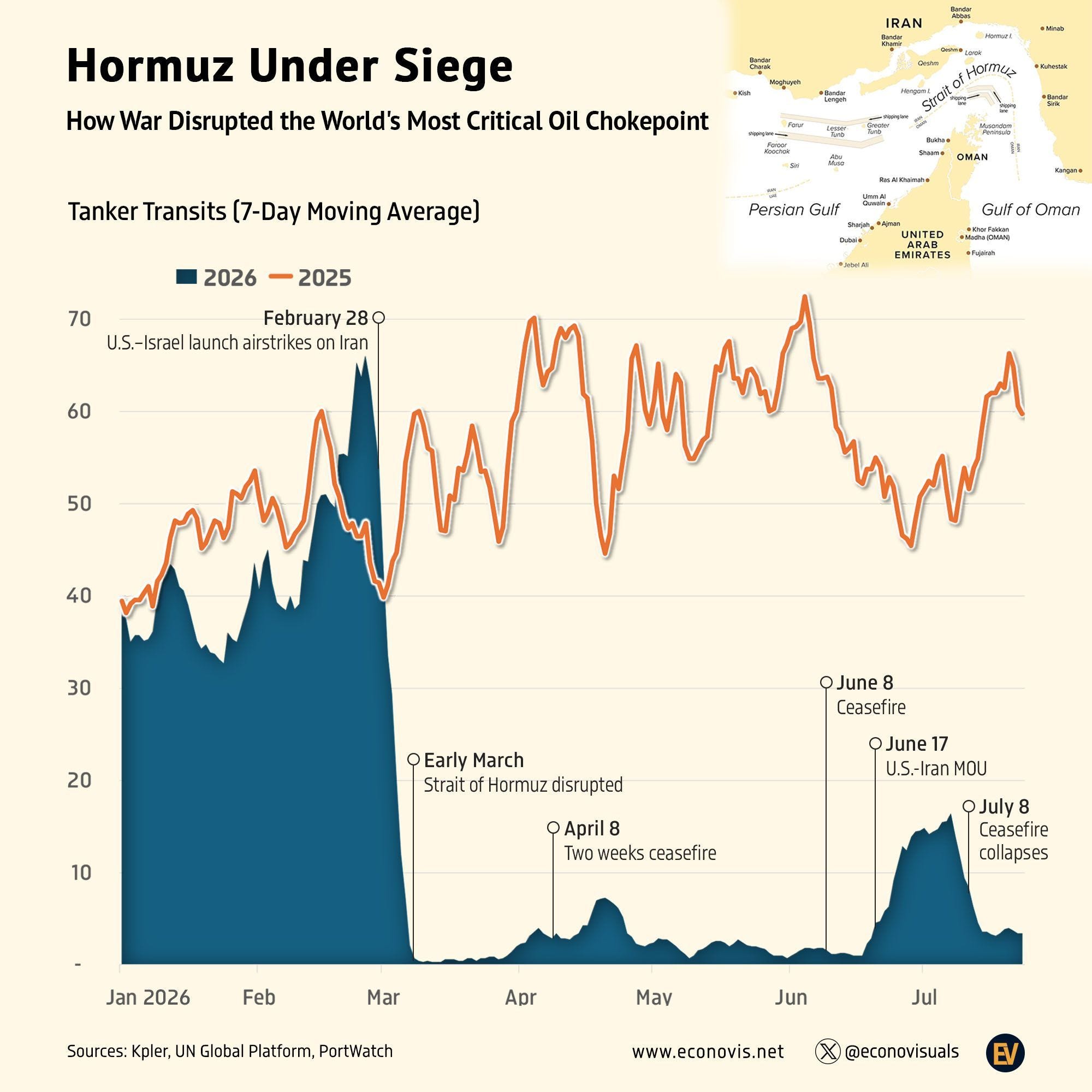
The longer Iranian resistance continues, the more long-term economic damage the Islamic Republic will endure, limiting the future ambitions of the IRGC. Wellhead pressure has been reduced to a trickle, only enough to feed domestic consumption, because no one abroad is buying Iran’s oil.
China does not want Iranian oil. India does not want Iranian oil. The US Navy is detaining or deterring any ship bound for Iranian ports. Meanwhile, CENTCOM reports a steady rise in overnight convoys. Hormuz is more or less constricted as the US Navy chooses, not as the IRGC chooses.
We must note that attempts to ‘fact check’ CENTCOM statements in this regard are made more difficult by the convoy tactic of turning off every ship’s automatic identification system (AIS) transponder during passage. Navy and Air Force tactics suppress IRGC radars, blinding any attack.
Thus missiles fall ineffectually into the sea, demonstrations of stubborn will to resist beyond all reason.
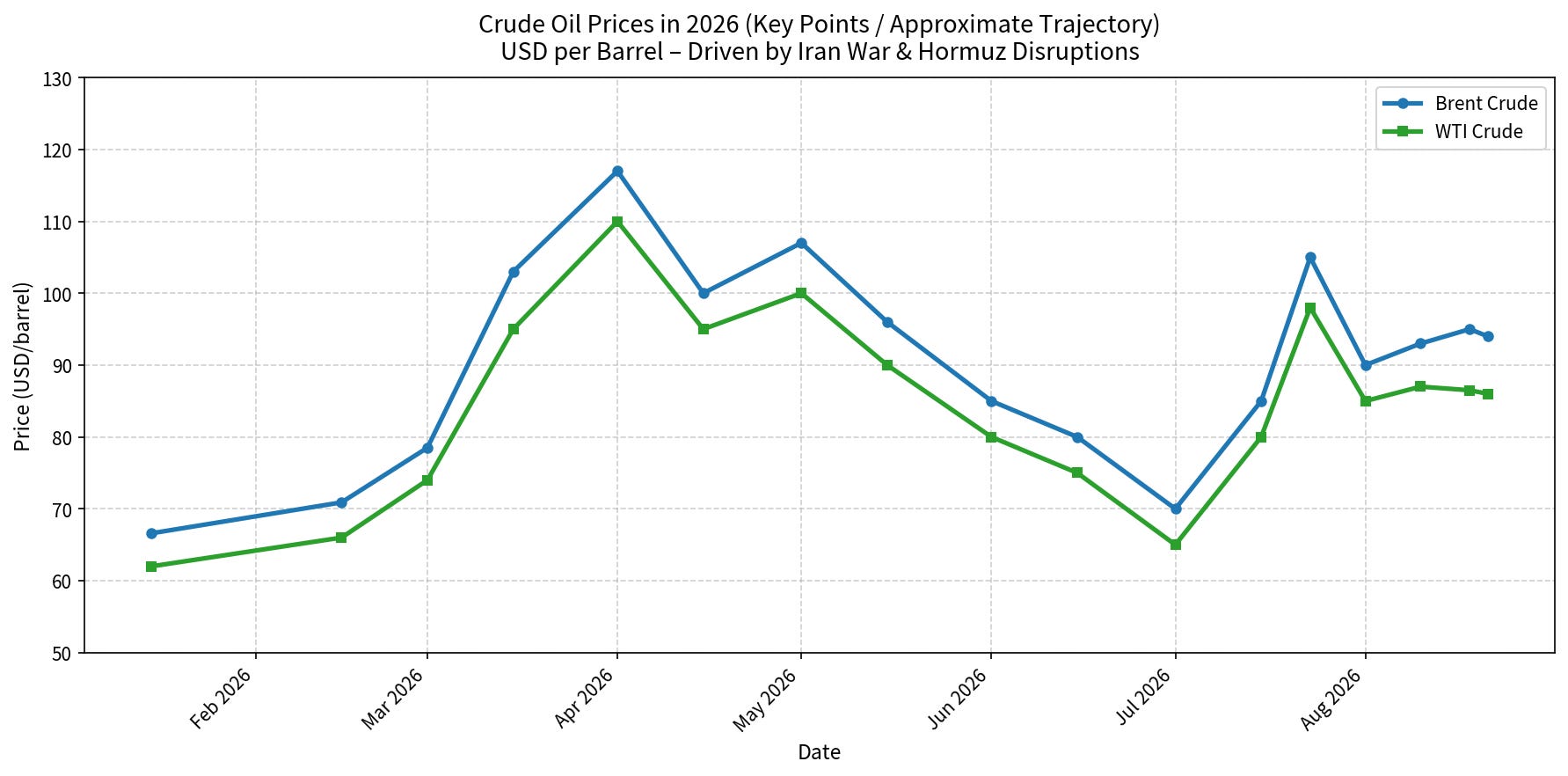
Oil markets reflect the truth of the strait. Iran has failed to create or sustain a global price shock. Markets loathe restrictions. Rather than capitulate to the demands of Tehran, the Arab states have announced or accelerated capital projects to circumvent the strait with pipelines, railroads, and highways.
Iran has made similar pronouncements, of course. But how will the regime pay for the new infrastructure without an economy?
War is merely the continuation of policy by other means
In his most famous work of the western military canon, Carl von Clausewitz wrote that “war is not merely an act of policy but a true political instrument, a continuation of political intercourse, carried on with other means. What remains peculiar to war is simply the peculiar nature of its means.”
Sniffing complaints about the politics of any war are misplaced, for “the political view is the object, War is the means, and the means must always include the object in our conception.” A war must serve political ends, which is to say it must be subordinated to a strategy of some kind, or it becomes “pointless and devoid of sense.”
Subordinating politics to military affairs is “absurd” because “politics has produced the war; it is the intelligence, war is merely the instrument and not the reverse.” This is true in both the US as well as Iran, though the policy contexts are very different.
